
Bizerte and Ichkeul
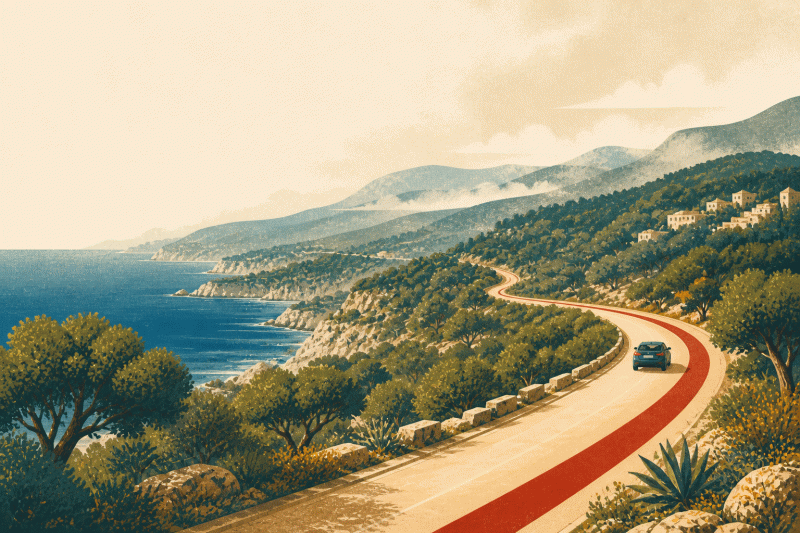
Bizerte's old harbour and its painted boats, the windswept northernmost tip of the African continent, and the birds of Lake Ichkeul: a day of water and green country, at your own pace.
Four days in a Tunisia of water and woodland: bird-filled lakes, cork oaks, coral coves and mountain villages, nowhere near the desert everyone expects.
On request
Duration
4 days / 3 nights
Who it suits
Nature and birdwatching enthusiasts, casual walkers, families, and repeat visitors to Tunisia who want something other than the south.
Price
On request
Four days in the Tunisia nobody puts on the poster: Bizerte's old port and its painted boats, the birds of Lake Ichkeul, the cork oaks of the Kroumirie, cool air at Ain Draham, Tabarka's coral coast and the Roman quarries at Chemtou. Woodland, water, and a vehicle for your group alone.
Departures
Greater Tunis: Tunis-Carthage airport, your hotel, or the La Goulette cruise terminal. Hammamet, Nabeul or the northern suburbs, with the route adapted to your starting point.
A working plan rather than a fixed track: the order of the days is reworked with you before departure, and on the road wherever that is practical.
Day 1 — Tunis, Utica and the old port of Bizerte
We leave Greater Tunis northwards across farming plains. A stop at Utica, a Punic and then Roman harbour now stranded miles inland by centuries of silt. Bizerte early in the afternoon: the old port with its painted fishing boats, the thick-walled kasbah, the fish market, then the corniche out to the cliffs of Cap Blanc.
Day 2 — Lake Ichkeul and the road into the Kroumirie
The morning goes to Ichkeul National Park, a brackish lake unlike anything else in the Mediterranean, where greylag geese, coots, flamingos and raptors gather in their thousands depending on the season. We climb to the ecology museum on the hillside for the view over lake and marsh. In the afternoon the road runs west through Sejnane and Nefza: the country closes in, cork oaks appear, and the land rises towards Ain Draham.
Day 3 — Ain Draham, Chemtou and the Tabarka coast
Ain Draham first thing: red roofs, mist in the valleys, cork oaks with the bark visibly stripped in panels. Then out to Chemtou, where the Romans quarried yellow marble veined with pink, with open workings, the bridge over the Medjerda and a well laid out museum. Afterwards the road drops to Tabarka: the Needles rising from the sea, the Genoese fort on its islet and the coral harbour.
Day 4 — Tabarka, Bulla Regia and the return
A last morning on the coast: the Tabarka market, a walk below the fort, or a boat trip if the weather cooperates. On the way back, Bulla Regia and its underground Roman villas, sunk below ground against the heat, with mosaics still in place beneath your feet. We return to Tunis down the Medjerda valley, dropping you at your hotel, the airport or the port at the time agreed with you.
March to June shows the north at its best: wintering birds are still around Ichkeul in early spring, the forest is green and the coast feels alive. Autumn is mild and clear. Winter is perfectly workable and often beautiful, provided you accept rain and mist, which are exactly what gives this region its colour.
The lake is one of the major migration stops in the western Mediterranean, but numbers shift with the season and the water level, so we never promise a particular species. Come early, bring binoculars and allow time on the hillside tracks. A naturalist guide can be arranged on request as a separate service.
Between Ain Draham and Tabarka they are narrow and full of bends, sometimes damp under the trees, but surfaced and open all year. If anyone in the group suffers from travel sickness, tell us: we drive more gently, keep the air moving and build in regular stops at the viewpoints.
Bizerte's old harbour and its painted boats, the windswept northernmost tip of the African continent, and the birds of Lake Ichkeul: a day of water and green country, at your own pace.
A day in the Kroumirie: cork oaks, cool forest air, and the sea below a Genoese fort.
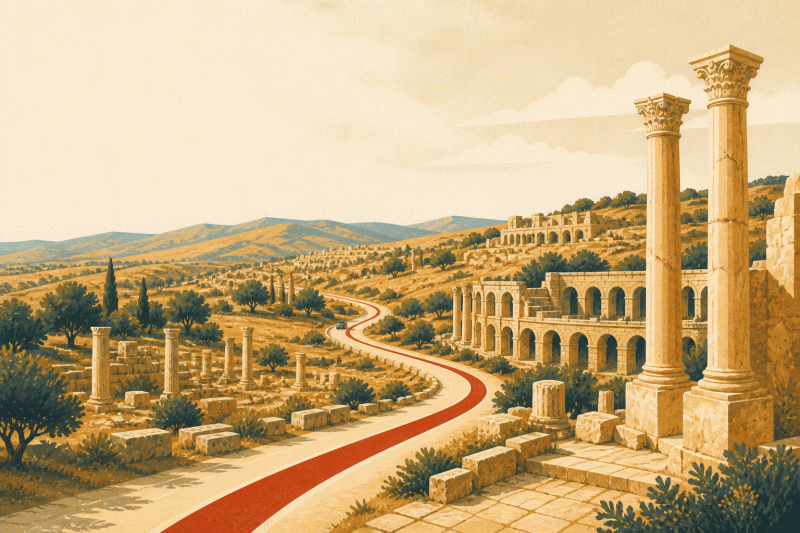
Two Roman cities in one day: Dougga up in the wind on its hillside, then Bulla Regia, where people went underground to live, with the mosaics still lying where they were laid.
One week, one private vehicle, and a country that finally joins up end to end.
Your dates, how many of you are travelling and where you start are enough to begin: we come back with a quote drawn up for this tour.
Fields not marked optional are needed to prepare a quote.
Every journey is quoted individually: no price is shown before your own quote.