
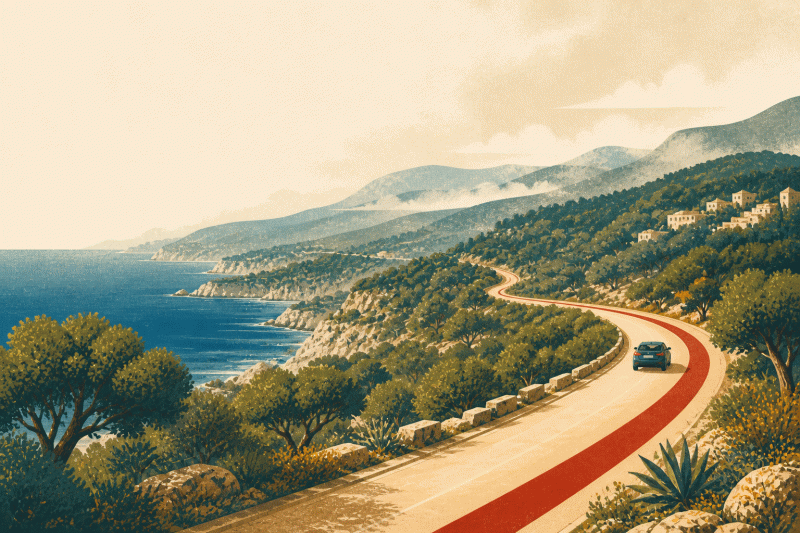
Tunisia's Green North — 4 days
Four days in a Tunisia of water and woodland: bird-filled lakes, cork oaks, coral coves and mountain villages, nowhere near the desert everyone expects.
A day in the Kroumirie: cork oaks, cool forest air, and the sea below a Genoese fort.
On request
Duration
A full day, a long one if you set out from Tunis; departure time and pace are agreed with you in the quote.
Who it suits
Nature lovers, families, photographers, and travellers who have already done the south
Price
On request
The north-west looks like nowhere else in Tunisia: hills of cork oak stripped red at the trunk, steep-roofed houses clinging to the mountain at Ain Draham, mist that lingers between the trees. Then the road drops in hairpins to Tabarka, its Genoese fort and a coral coast bristling with sandstone needles.
Pick-up
Pick-up in Tunis, Bizerte, Beja or Tabarka itself: hotel, guesthouse or a private address. From Tunis it is a long run each way, so we agree an early enough start in the quote to catch the forest in good light.
The order of the stops shifts with your start time, the traffic and how long you want to spend at each place.
The Kroumirie hills
Past Beja and Jendouba the road leaves the grain plains and goes into the trees. The cork oaks are stripped to head height, the bare wood a dark red, and herds cross the tarmac without warning. The climb is steady: the air cools, the woods close in, and there is a pass where you can stop and watch the forest run on to the ridges that mark the Algerian border.
Ain Draham
Ain Draham is built in tiers up the mountainside, its steep red-tiled roofs made for rain and, some winters, for snow. You wander the main street, look over stalls of honey, wild mushrooms and cork objects, and eat grilled meat under the trees. Mist can climb and blot out the whole valley in minutes; that is simply part of the place.
Tabarka
The drop to the sea comes in hairpins, and the coast arrives all at once. The Genoese fort stands over the old islet, now tied to the town by a causeway; opposite, the Needles drive their blades of sandstone into the water. You walk the harbour, watch the boats come in and take a coffee facing open water. Coral made Tabarka's name long before any hotel did.
Yes, provided you accept a long one: reckon on a morning's drive out through Beja and Jendouba, and the same coming back. In a private vehicle that stays comfortable, with breaks whenever you want them. If you would rather take it slowly, many travellers add a night up there and we adjust the quote.
Every season has something. Spring gives the greenest forest; summer here is far easier to breathe than the rest of the coast; autumn still shows the cork trunks red; winter brings rain, low cloud and occasional snow on the ridges. You only need to pack for it.
Nothing is compulsory. The day is largely done by car with short stops, and your driver drops you as close as the road allows to each viewpoint. If you want to walk under the trees or follow a marked path, say so when booking: we build in the time, and guided walking can be arranged separately on request.
Four days in a Tunisia of water and woodland: bird-filled lakes, cork oaks, coral coves and mountain villages, nowhere near the desert everyone expects.
Bizerte's old harbour and its painted boats, the windswept northernmost tip of the African continent, and the birds of Lake Ichkeul: a day of water and green country, at your own pace.
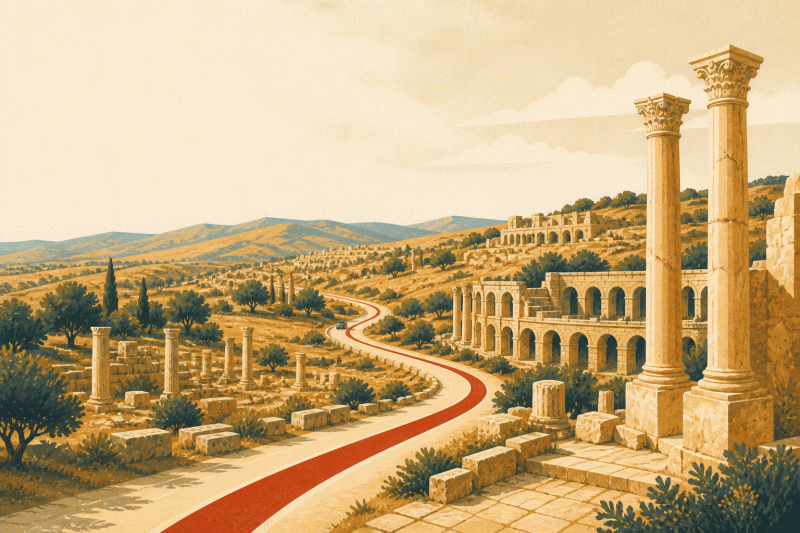
Two Roman cities in one day: Dougga up in the wind on its hillside, then Bulla Regia, where people went underground to live, with the mosaics still lying where they were laid.
Give us the date, how many of you are travelling and your pick-up address: we reply with a quote drawn up for this day out.
Fields not marked optional are needed to prepare a quote.
Every journey is quoted individually: no price is shown before your own quote.